
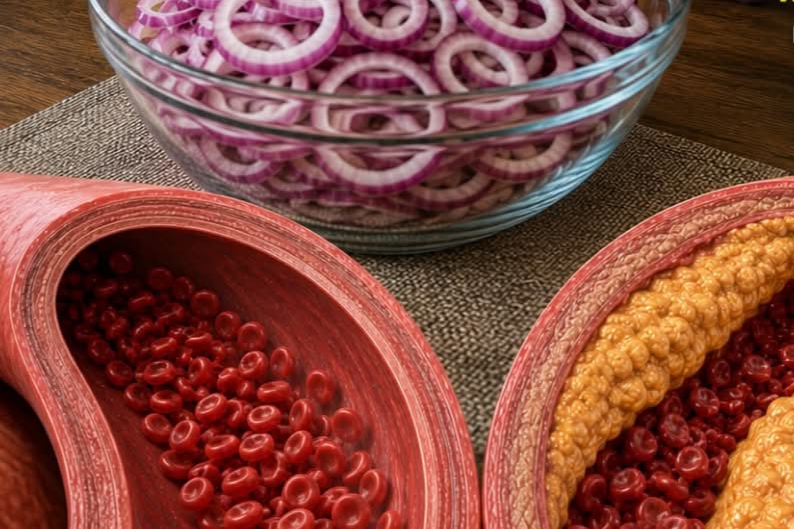
Onions are more than just a flavorful ingredient. They contain antioxidants and plant compounds such as quercetin, which have been studied for their potential role in supporting heart and metabolic health.
For older adults, adding onions to a balanced diet can be an easy way to increase vegetable intake and add beneficial plant compounds to everyday meals.
Important: Eating one raw onion does not unclog arteries or remove plaque within 24 hours. The potential benefits of onions should be understood as part of a healthy diet and lifestyle.
11 Potential Benefits of Adding Onion to Your Diet
1. Supports Heart Health
Onions contain plant compounds that may contribute to cardiovascular health when included in a balanced diet.
2. May Support Healthy Cholesterol
Some research has investigated onion preparations for their potential effects on blood lipid levels. However, onions should not replace prescribed treatment for high cholesterol.
3. May Support Healthy Blood Pressure
Quercetin, a flavonoid found in onions, has been studied for its possible effects on blood pressure. Eating onions should be viewed as part of an overall healthy lifestyle.
4. Provides Antioxidants
Onions contain antioxidant compounds that help protect cells from oxidative stress.
5. Supports Healthy Blood Vessels
The plant compounds in onions are being studied for their potential relationship with vascular health. They cannot, however, remove existing artery blockages.
6. Low in Calories
Onions provide plenty of flavor while being relatively low in calories, making them an easy addition to nutritious meals.
7. Helps Increase Vegetable Intake
Adding onion to salads, sandwiches, soups, and cooked dishes can make it easier to eat a greater variety of vegetables.
8. Fits a Heart-Healthy Diet
Onions pair well with vegetables, beans, whole grains, nuts, fish, and other foods commonly included in heart-healthy eating patterns.
9. Provides Beneficial Plant Compounds
Onions contain flavonoids and sulfur-containing compounds that contribute to their nutritional value.
10. May Support Metabolic Health
Researchers have studied onions and onion-derived preparations in relation to blood glucose and lipid markers. More research is needed, and onions should not be considered a treatment for metabolic disease.
11. Easy to Add to Everyday Meals
You can enjoy onion raw in salads, sandwiches, wraps, or homemade salsa, or simply add it to cooked dishes.
🧅 Easy Raw Onion Salad Recipe
This simple recipe is an easy way to enjoy raw onion as part of a balanced meal.
Ingredients
- ½ small red onion, thinly sliced
- 1 medium tomato, chopped
- ½ cucumber, chopped
- 1 tablespoon extra-virgin olive oil
- 1 tablespoon fresh lemon juice
- A small pinch of salt
- 1 tablespoon fresh parsley, chopped
Instructions
- Slice the red onion very thinly.
- If the onion tastes too strong, soak the slices in cold water for 5–10 minutes, then drain well.
- Add the onion, tomato, cucumber, and parsley to a bowl.
- Add the olive oil and fresh lemon juice.
- Mix everything gently.
- Serve fresh alongside lunch or dinner.
How Often Can You Eat It?
A small serving can be included regularly as part of a balanced diet. You do not need to eat a whole raw onion at once.
If raw onion causes gas, bloating, heartburn, or stomach discomfort, reduce the amount or try cooked onion instead.
Can One Raw Onion Really Unclog Arteries in 24 Hours?
No. There is no reliable clinical evidence that eating one raw onion can remove arterial plaque or unclog blocked arteries within 24 hours.
Artery health depends on many factors, including cholesterol levels, blood pressure, smoking, diabetes, physical activity, genetics, and overall diet.
The best way to think about onions is as one nutritious ingredient that can support a healthy eating pattern over time—not as a quick medical remedy.
Final Takeaway
Raw onions can be a flavorful and nutritious addition to your meals. Their antioxidants and plant compounds make them an interesting part of a diet focused on vegetables and heart-friendly foods.
Try the simple onion salad above and enjoy it alongside a balanced meal.
Remember: healthy foods can support your health, but no single food can replace medical treatment or reverse artery disease overnight.
This article is for general educational purposes only and does not replace professional medical advice.